
What makes a wedding Art Deco
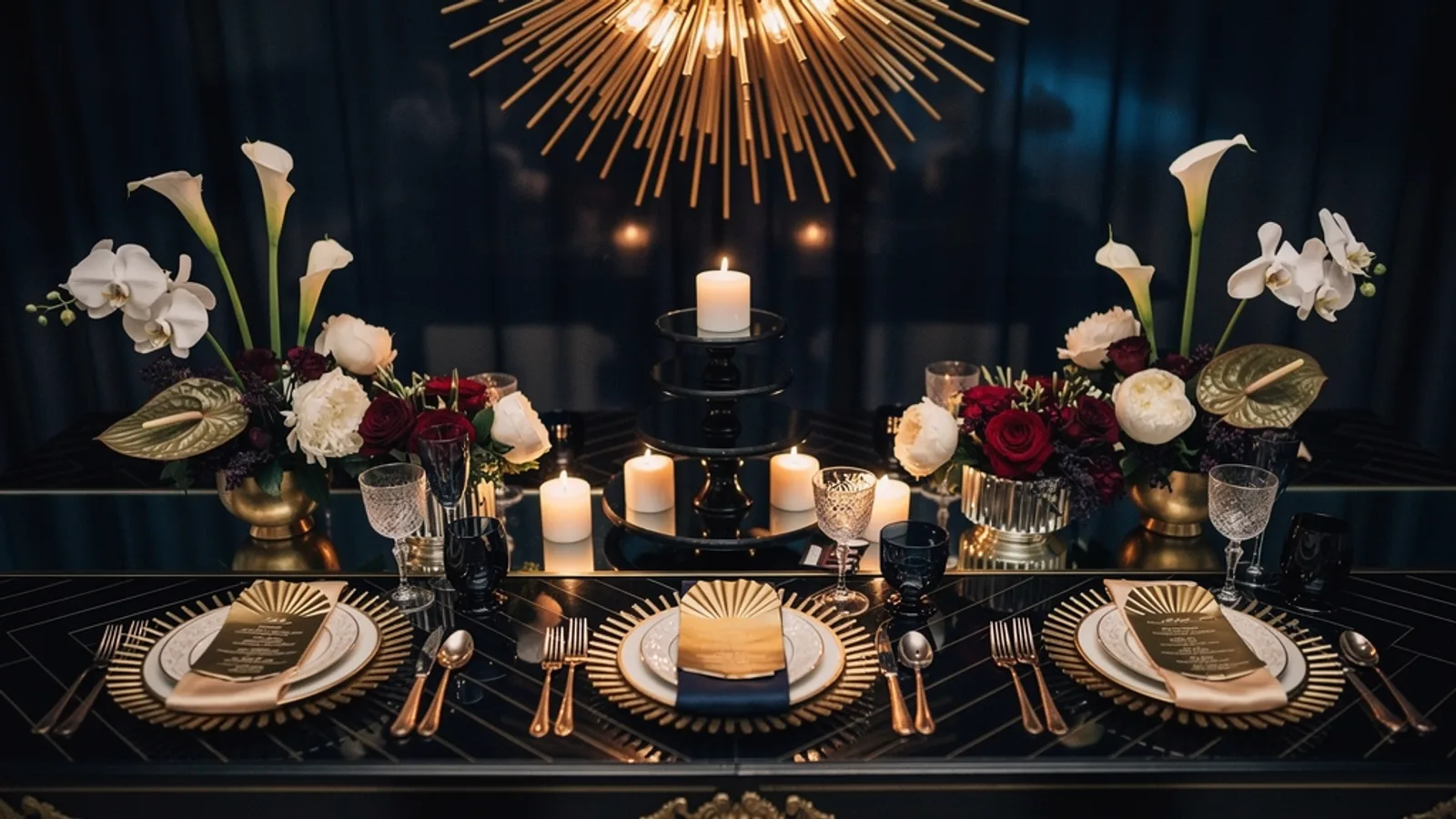
Art Deco is the glamour direction, drawn from the 1920s and 30s: geometric pattern, strong symmetry, metallic shine, and a sense of occasion. Where boho is loose and garden is soft, Deco is precise and high-contrast, all clean lines and repeated shapes. It reads formal and theatrical, so it suits couples who want their wedding to feel like an event rather than a gathering.
The colors
Deco palettes are built on contrast and metal. The classic is black and gold with ivory (), often with a jewel tone leading: emerald (), sapphire, or a deep burgundy. Gold does the work a soft metallic does in other themes, but here it is a main color, not an accent. Keep the palette tight and let the shine carry the richness rather than adding more colors.
Patterns and materials
This is where Deco is won. Lean on geometry: chevron, sunburst, fans, and stepped shapes in the stationery, the dance floor, and the backdrops. Mirrored and glass surfaces, brass, crystal, tall candelabras, and coupe glasses all belong. Feathers and a little fringe read Deco in small doses. The through-line is symmetry, so mirror your arrangements and balance both sides of every focal point.
The florals
Deco florals are structured and upright rather than wild. Calla lilies, orchids, and roses in tall, symmetrical arrangements suit it, often raised on gold or crystal stands so the tables read vertical and grand. Keep the color tight to the palette, and let the container and the height do as much as the flowers.
The line between Deco and costume
Art Deco tips into costume-party territory when the flapper-and-feather props take over. The fix is to treat it as a design language, not a dress-up box: real geometry, genuine symmetry, and quality metallics land as glamour, while a pile of gold plastic beads and headbands reads as a theme night. Deco shines in ballrooms, hotels, and historic venues, at black-tie evening weddings in fall and winter.