
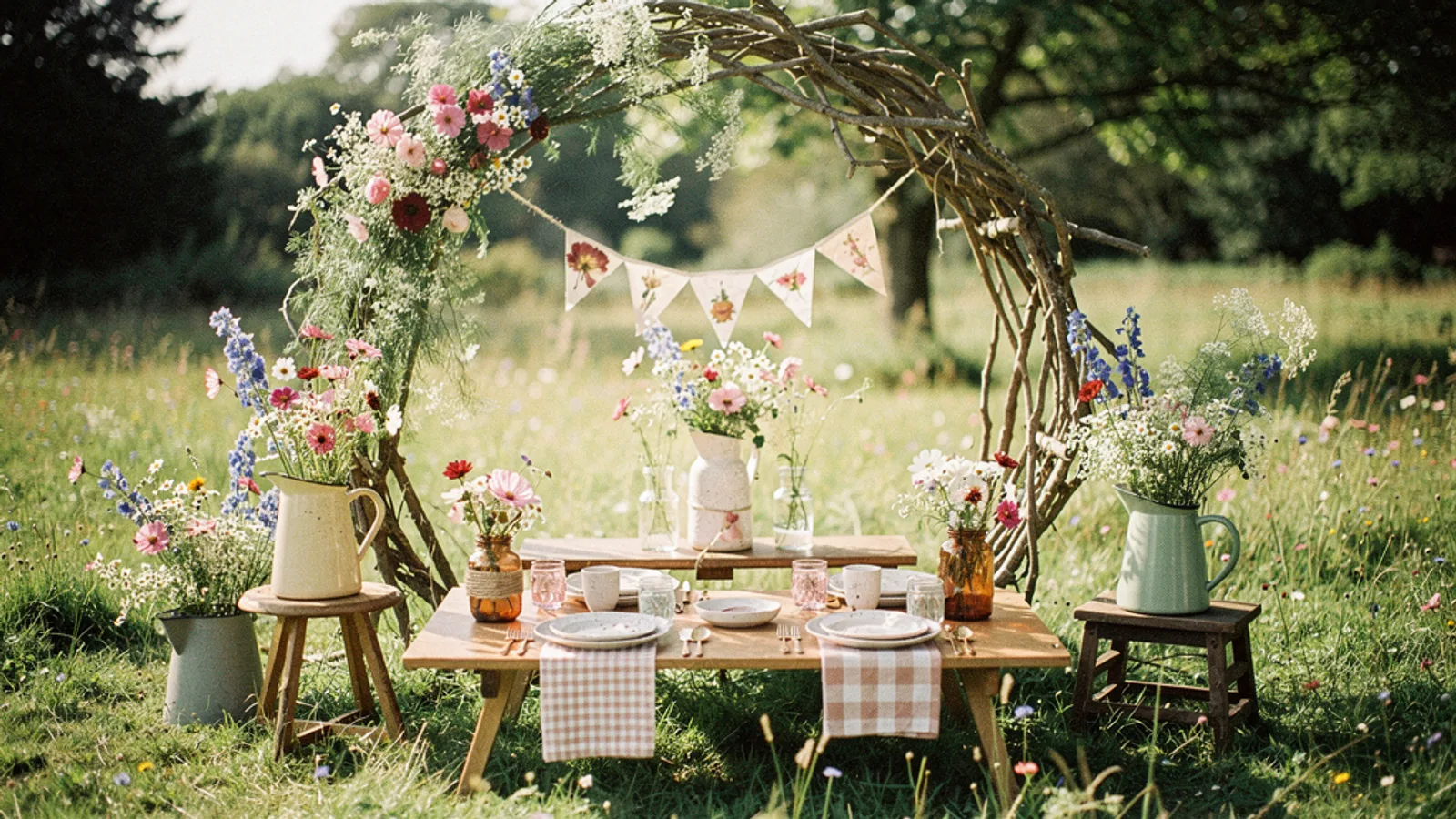
What makes a wedding cottagecore
Cottagecore is the softest, most storybook of the country-leaning themes. It romanticizes simple rural life: wildflowers picked by the armful, homemade bread and jam on the table, mismatched vintage china, and a gentle, faded-pastel palette. Where rustic is built on wood and warm neutrals, cottagecore is built on flowers and handmade detail, and it feels tender and a little nostalgic rather than sturdy.
The colors
The palette is soft and sun-faded, like an old seed packet. Cream and sage form the base, with buttercup yellow (), soft pink, and lavender () leading. Nothing should be bright or glossy; cottagecore lives in the muted, gentle end of every color. A few different pastels mixed loosely, the way wildflowers actually grow, reads more cottagecore than a tight, matched scheme.
The florals
Wildflowers are the heart of it. Cosmos, daisies, sweet peas, foxglove, ranunculus, and cottage garden roses in a loose, meadow-picked arrangement, spilling and a little wild. Skip anything that looks florist-perfect or tightly domed. Pressed flowers, flower crowns, and blooms tucked into the cake and the place settings all belong here.
Decor and details
Handmade is the whole feeling. Mismatched vintage china and glassware, gingham or floral-print linen, lace, handwritten signs, wicker, and honey or jam as favors all read cottagecore. Bud vases of a single wildflower down the table beat one large centerpiece. Keep it personal and a little imperfect; the moment it looks catered and coordinated, the charm drains out.
When and where it works
Cottagecore belongs to spring and summer, in the countryside: gardens, meadows, farmhouses, and backyards. It is one of the most DIY-friendly directions, since the handmade, gathered look forgives a lot and actually rewards a homemade touch. Pick a florist who works loose and seasonal, and lean into anything you can make yourself.