
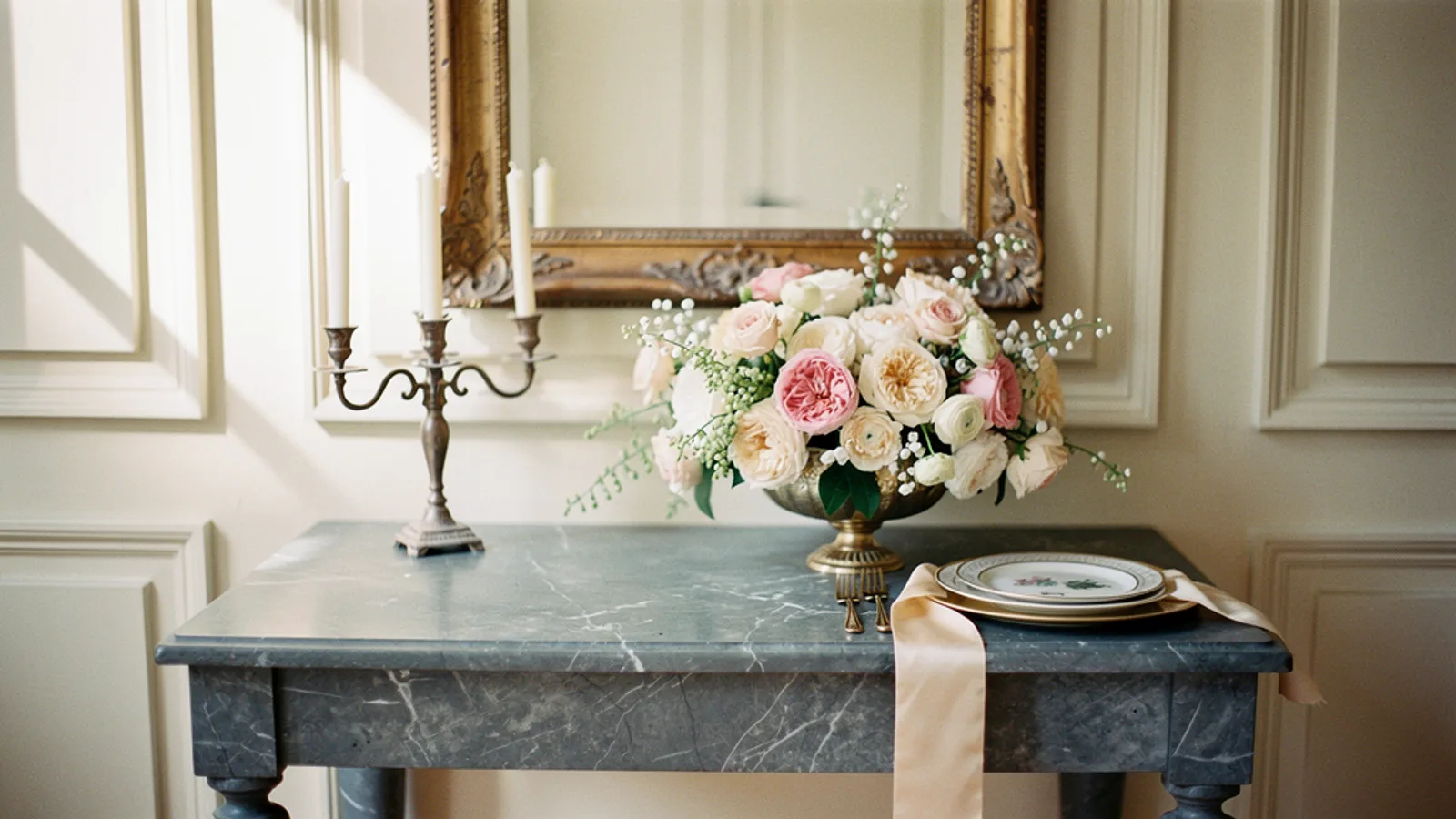
What makes a wedding elegant
Elegance is the direction that ages well. It is timeless rather than trend-led, formal-leaning without being stiff, and it favors quality over quantity every time. The feeling comes from consistency: one palette, one register of materials, and a level of polish carried all the way through, from the invitation to the last table. Nothing on an elegant board is shouting, and nothing is fighting anything else.
The colors
Elegant palettes stay soft and restrained. The safest base is ivory and champagne () with a warm gold, which flatters candlelight and almost any venue. From there you can go two ways: lighter, with blush and soft neutrals for a romantic-formal look, or deeper, with a single rich anchor like navy, emerald, or burgundy for a black-tie feel. Keep it to three or four colors with one clearly leading. Elegance is quiet, so the palette should be too.
Materials and details
This is where elegant weddings are won or lost. Good linen instead of the standard house tablecloth, real candles in quantity, proper glassware, and heavier paper for the stationery do more for the feeling of refinement than any single big spend. Symmetry helps — matched arrangements, balanced place settings, clean tailoring on the attire. Metallics should be consistent: pick gold or silver and stay with it rather than mixing.
The florals
Elegant florals are classic and full without being wild: garden roses, hydrangea, peonies, ranunculus, and lisianthus in a tight tonal range. Lush and structured beats loose and gathered here. Repeat the same arrangement down a table rather than varying it, and let greenery play a supporting role instead of taking over.
The mistakes that undo it
Elegance is fragile in a specific way: it survives on consistency, so a few off notes read louder than they would in a relaxed look. The usual culprits are mixed metals, a palette that crept to five or six colors, mismatched rental glassware, and harsh overhead lighting where candlelight was wanted. Fix those four and most weddings read a full step more refined.
Where it works best
Elegant suits ballrooms, estates, historic venues, and any space with architectural detail worth dressing up rather than covering. It works year-round, and it is the safest direction when your guest list skews formal or multi-generational, since it rarely reads as too much to anyone.