
What makes a wedding Mediterranean
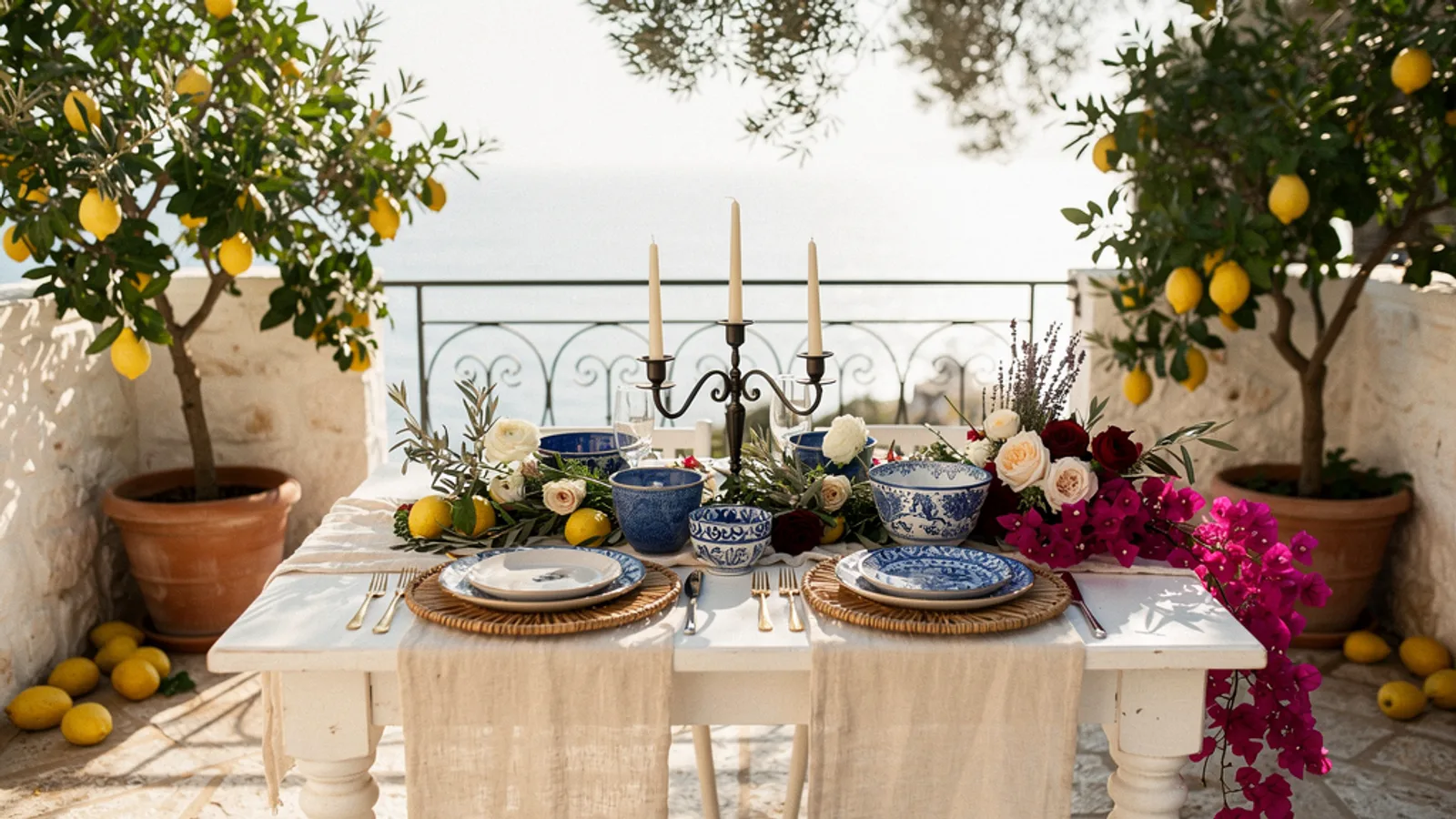
A Mediterranean wedding is built around the feeling of a long lunch that runs into the evening. It is relaxed but not rustic, elegant but not formal, and it puts the table, the food, and the setting ahead of built decor. Think coastal Italy, Greece, and the south of France: sun-warmed stone, olive groves, lemon trees, and everyone at one table for hours.
The colors
The palette is earthy and sun-bright at once. Olive green and warm white are the base, with terracotta () and a soft lemon yellow () as the leads. A Mediterranean blue-and-white, borrowed from Greek and ceramic tradition, is the cooler alternative. Whichever way you go, keep it warm and a little faded rather than tropical-bright.
The table and decor
One long, shared table is the signature, set family-style so the food is part of the decor. Run olive branches down the middle, add lemons or figs, terracotta pots, and mismatched ceramic, and keep the linen simple and light. Taper candles and clustered bud vases finish it. Resist the urge to over-style; the point is generous and lived-in, not staged.
The florals
Foliage leads here more than flowers. Olive branches, bougainvillea, and plenty of greenery form the base, with roses, ranunculus, and a little citrus worked through in warm tones. Loose and low along the table beats tall and formal, since nothing should block the conversation across it.
When and where it works
Mediterranean suits summer and early fall, outdoors, in warm light. Villas, vineyards, courtyards, olive groves, and coastal venues are its natural homes, and it fits a wedding that centers on a long, generous meal. Skip it for a formal indoor ballroom, where the relaxed, al fresco spirit has nowhere to land.