
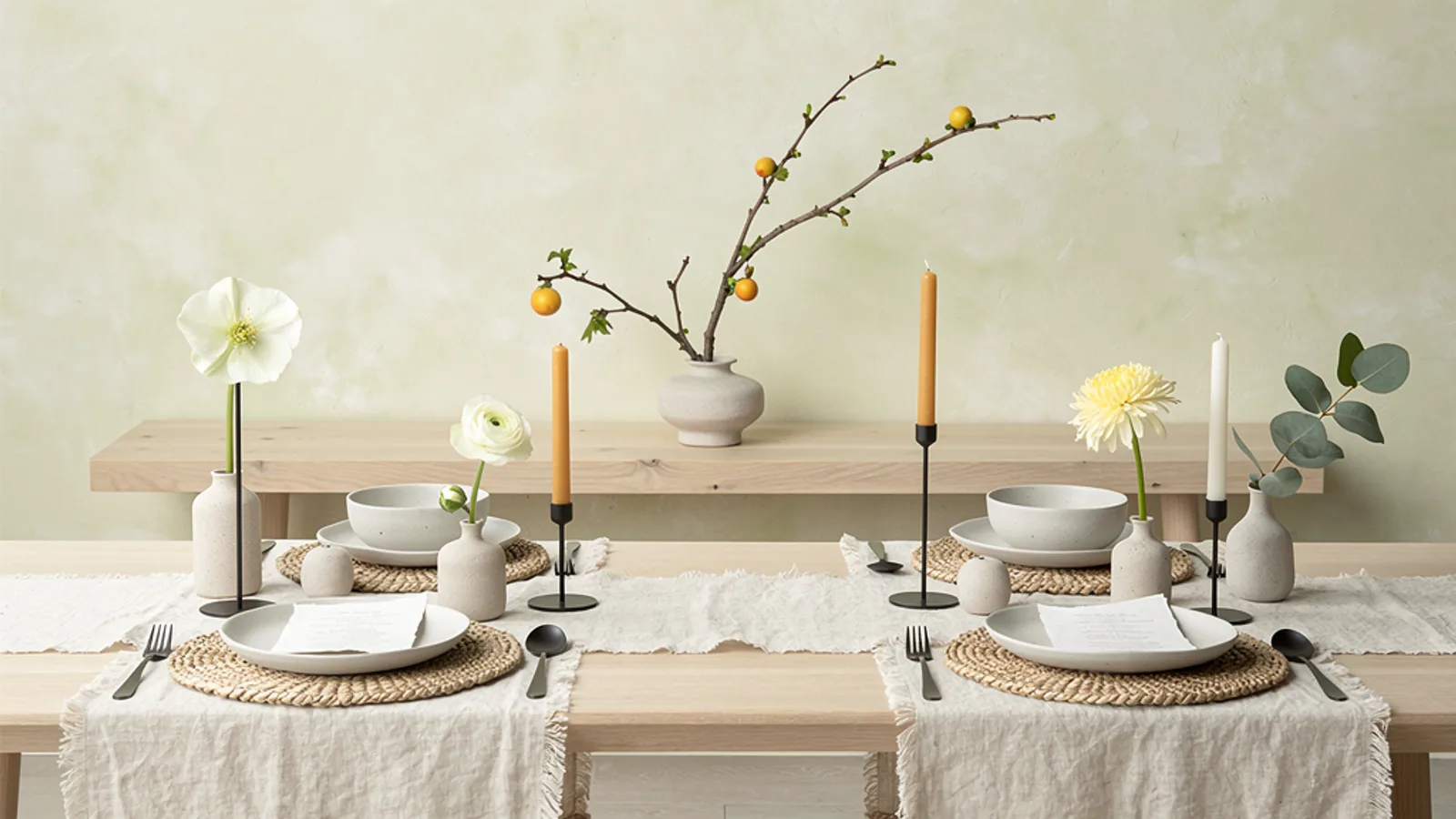
What makes a wedding minimalist
A minimalist wedding is calm and warm rather than empty and cold. It takes its cues from Scandinavian and Japandi design: soft neutral color, natural materials, clean shapes, and plenty of negative space, all in service of a quiet, uncluttered feeling. The point is not to have less for its own sake; it is to keep only what matters and let each piece be seen.
The colors
The palette is tonal and warm. Build on white, cream, and oat (), layering soft taupe and a touch of sand or pale sage, with black or a warm wood tone for the small amount of contrast the look needs. Everything sits close together, so texture rather than color creates the interest. Keep it warm; a cool grey palette pushes minimalist toward clinical.
Minimalist vs. modern
These get used interchangeably, but they pull apart. A modern wedding is architectural and high-contrast, built on hard surfaces, monochrome, and a statement piece or two. Minimalist is softer and more natural: warm neutrals, wood and linen, and a calm rather than a bold feeling. If modern is a gallery, minimalist is a sunlit, spare room. Pick the one that matches whether you want striking or serene.
Materials and decor
Natural materials carry it. Linen, raw wood, stone, matte ceramic, and paper in their real colors, with clean lines and no ornament. One good candle, a single-stem arrangement, and an uncluttered table do more than a full centerpiece. The trick is that minimal only works when the few things you keep are quality, since there is nothing to hide behind.
The florals
Minimalist florals are sparse and intentional. A single variety in small numbers, a few branches, or a low, simple arrangement suits it, often with dried elements for texture. Leave space around the flowers rather than filling the table, and let the shape of a few stems be the statement.
How to keep it from looking sparse
This is the real risk. Minimalist tips into underwhelming when it just reads as not-enough. The fixes are texture and quality: layer linen, wood, and ceramic so the neutral palette has depth, spend on the few elements that show, and treat negative space as a deliberate choice rather than a gap. Warm light helps too. It works in galleries, lofts, sunlit rooms, and small weddings, in any season.