
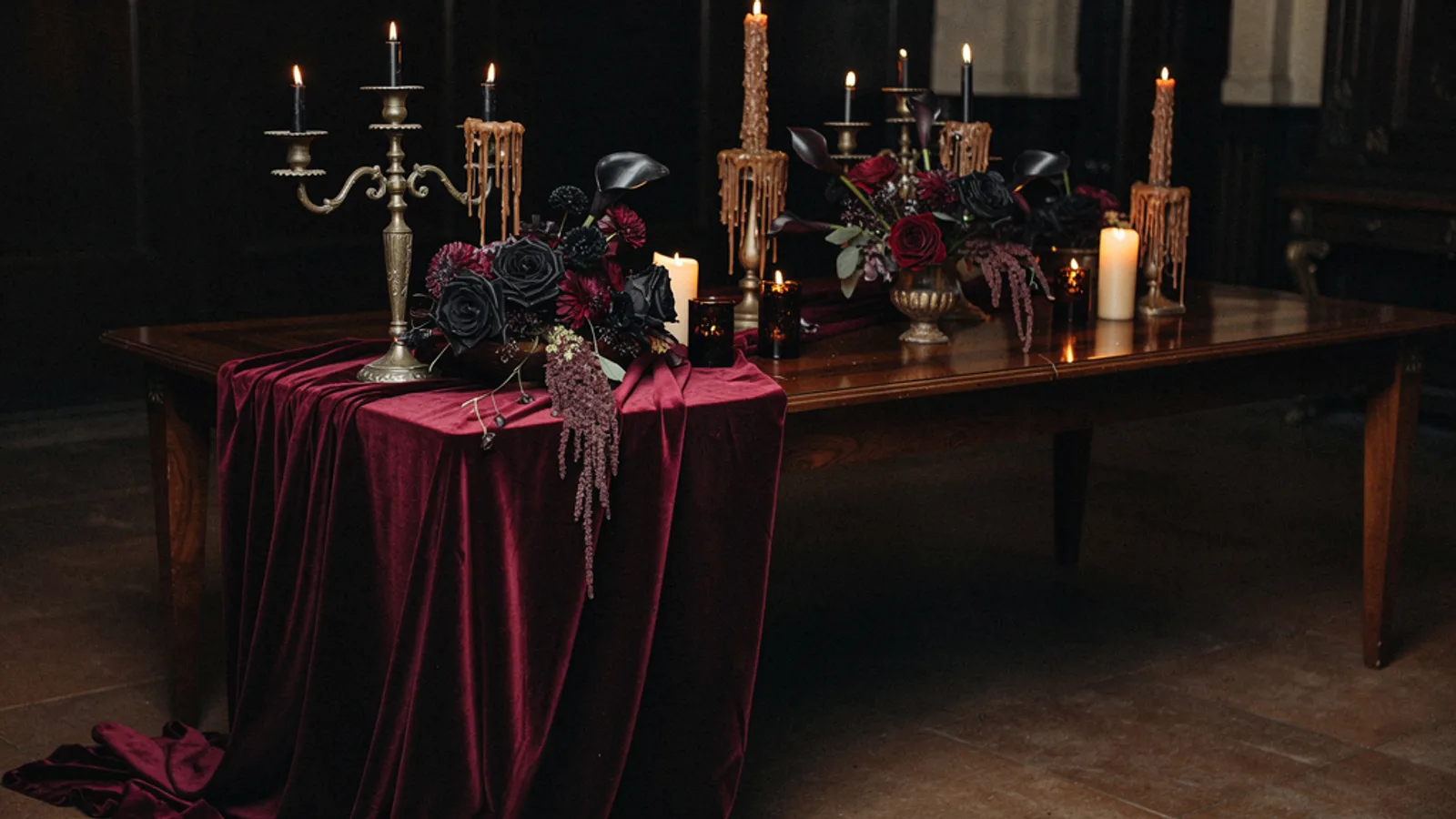
What makes a wedding moody
A moody wedding is the dark, romantic opposite of a light garden one. It runs on saturated color, deep shadow, and candlelight, and it feels intimate and a little dramatic rather than airy and sweet. The look reads richest in the evening and in cooler seasons, and it suits couples who are drawn to depth and drama over pastel and daylight.
The colors
Moody palettes go deep. Build on a near-black or charcoal base, then lead with rich jewel tones: burgundy (), plum, emerald, or midnight navy. A warm metallic like gold or antique brass keeps it from going flat, and one lighter note, a dusty mauve or a muted blush, gives the eye somewhere to rest. Keep the light colors scarce; the drama comes from how dark you are willing to go.
Lighting is the whole thing
This is the section that matters most. A moody wedding lives or dies on light, and the answer is candlelight: tapers in quantity, clustered pillars, low warm bulbs, and as little overhead light as the venue will allow. The same deep palette that looks rich by candlelight looks dreary under bright fluorescent light, so lighting is not a finishing touch here, it is the theme. Get that right and everything else falls into place.
The florals
Moody florals are dark and textured. Deep dahlias, burgundy and black-red garden roses, plum ranunculus, calla lilies, and chocolate cosmos, mixed with trailing greenery and a few dried elements for depth. Loose and slightly overgrown beats tidy, and the arrangements should look like they are absorbing the low light rather than reflecting it.
Where it works
Moody belongs to fall and winter and to evening receptions. Ballrooms, estates, barns with good dark bones, and any indoor space you can dim all suit it. It is the natural home for velvet, richer fabrics, and a later, more grown-up party, so lean into the drama rather than softening it.