Introduction to Navy Blue Wedding Colors
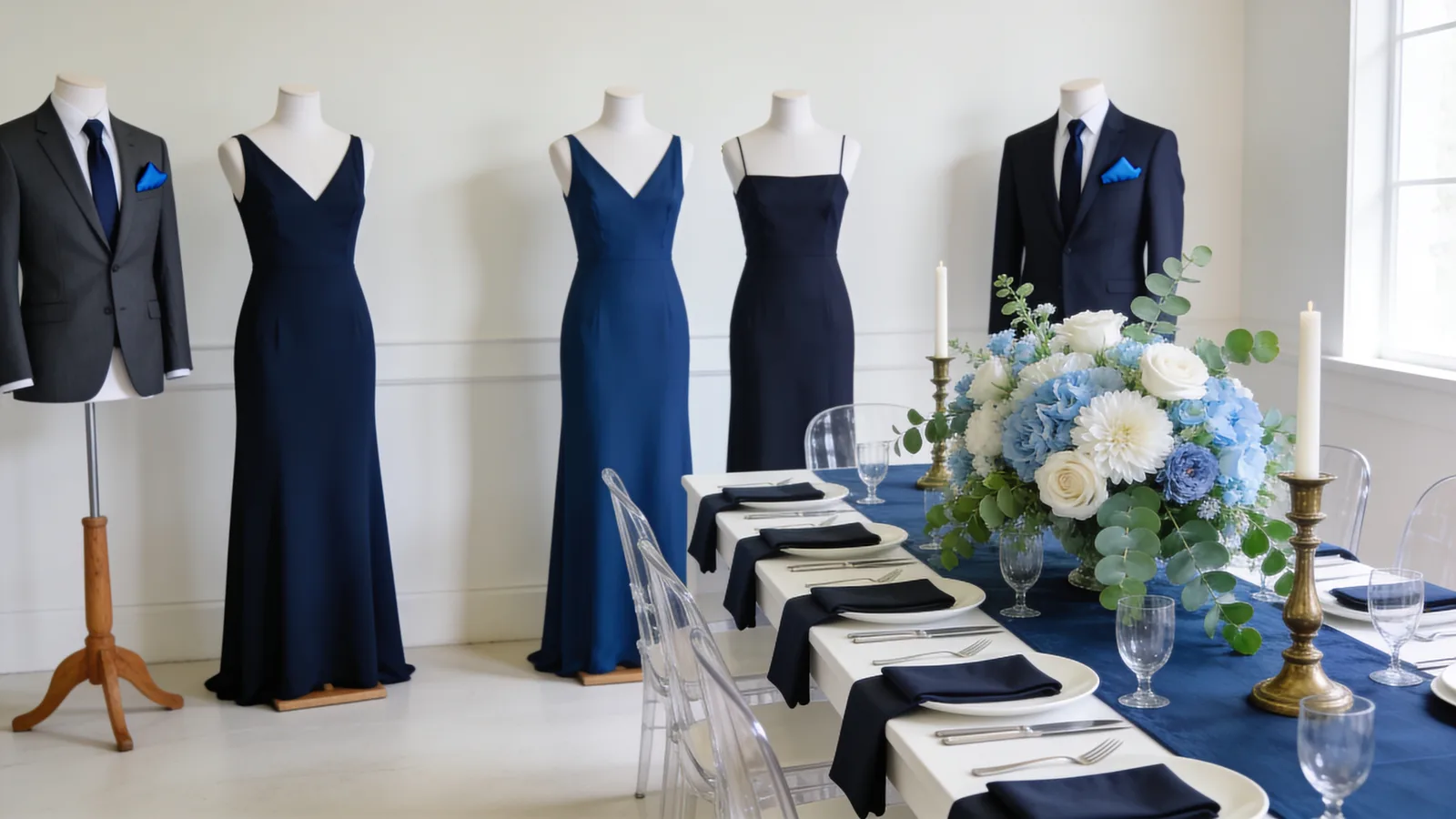
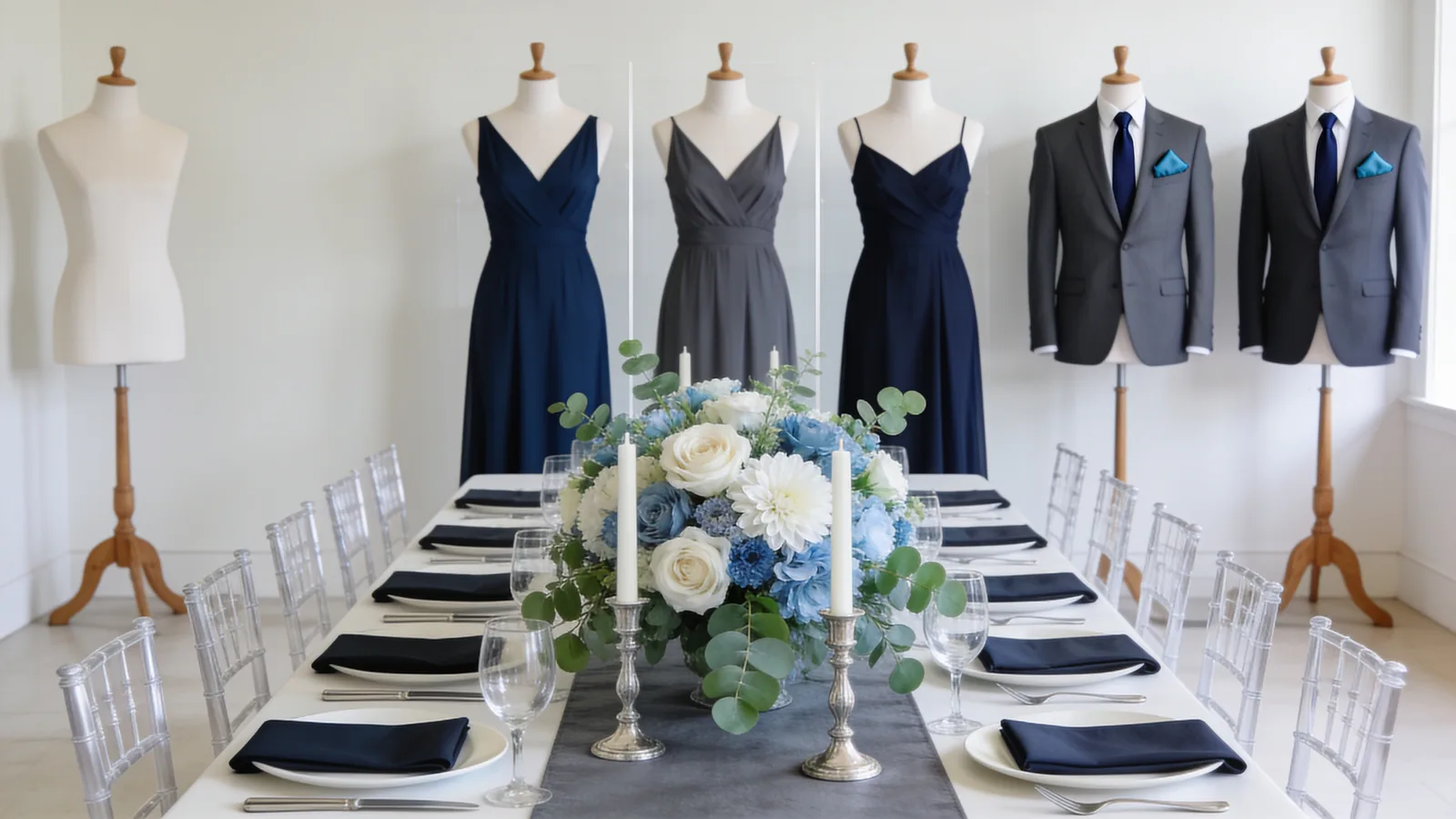
Navy blue brings depth and sophistication to wedding palettes. It's a rich hue that adapts to both classic and modern themes. Pair it with blush pink, gold, sage green, or burgundy to personalize your wedding aesthetic. Navy blue evokes trust, stability, and elegance, qualities many couples cherish on their big day.
Associated with the sea and sky, navy blue adds a serene quality to your celebration. It's a popular choice for those seeking a refined yet grounded atmosphere. Avoid pairing navy with other dark, cool shades to maintain contrast and prevent it from appearing black in photos, especially in dimly lit venues (source).
Incorporating navy blue can be simple, like bridesmaid dresses in soft chiffon, or bold, like table linens with metallic accents. This color's flexibility makes it a favorite among those who want a wedding that feels both personal and enduring. Ready to explore your perfect navy blue palette? The VeilBoard quiz offers a swift path to a custom moodboard and color scheme.
Popular Navy Blue Wedding Color Combinations
Navy blue pairs beautifully with blush, gold, sage green, burgundy, coral, lavender, and peach. Each brings its own vibe, from soft and romantic to bold and modern. Here's how they work.

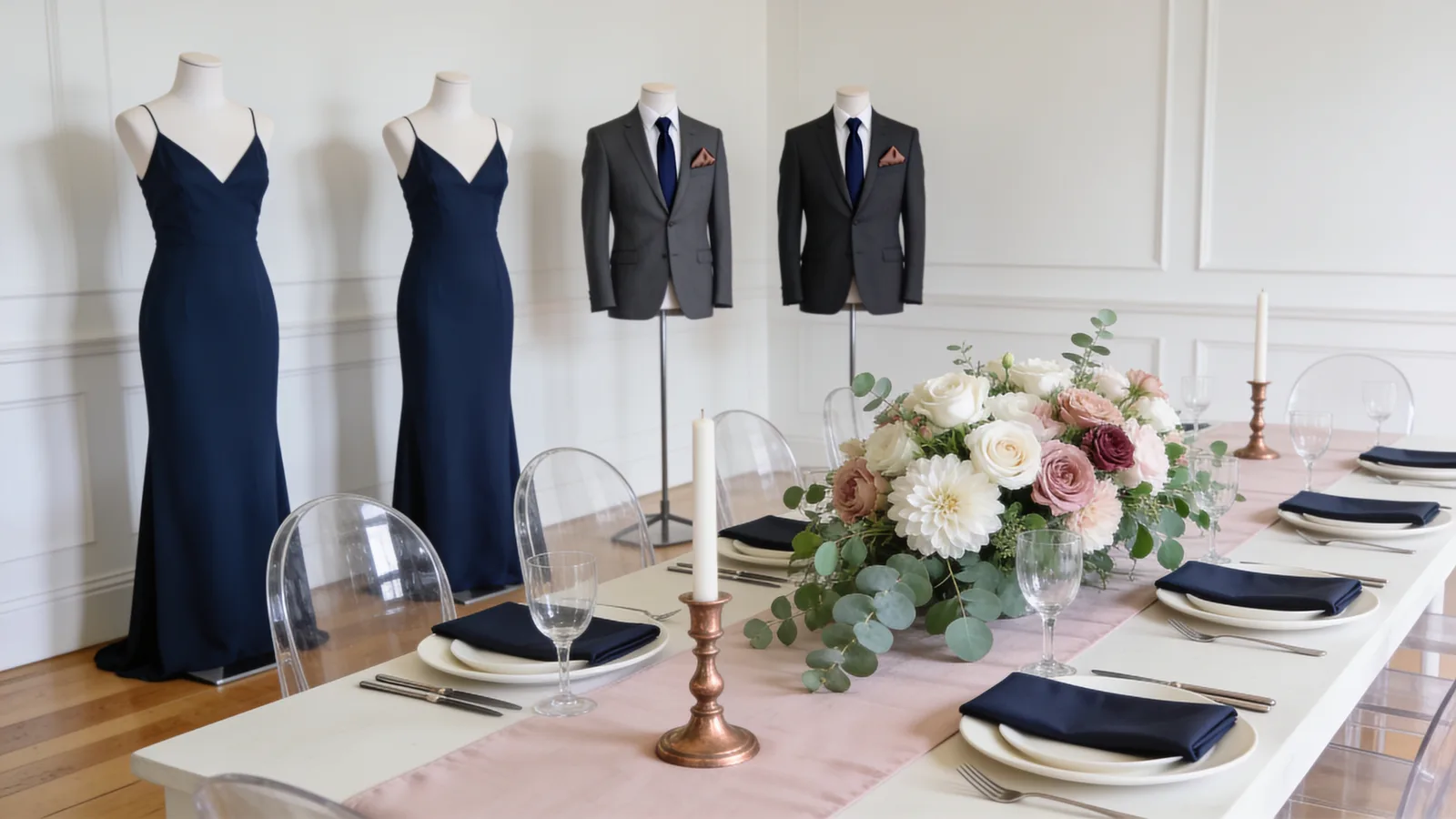
- Navy Blue and Blush: A classic pairing. Picture blush roses, navy linens, and ivory accents. Perfect for spring weddings.
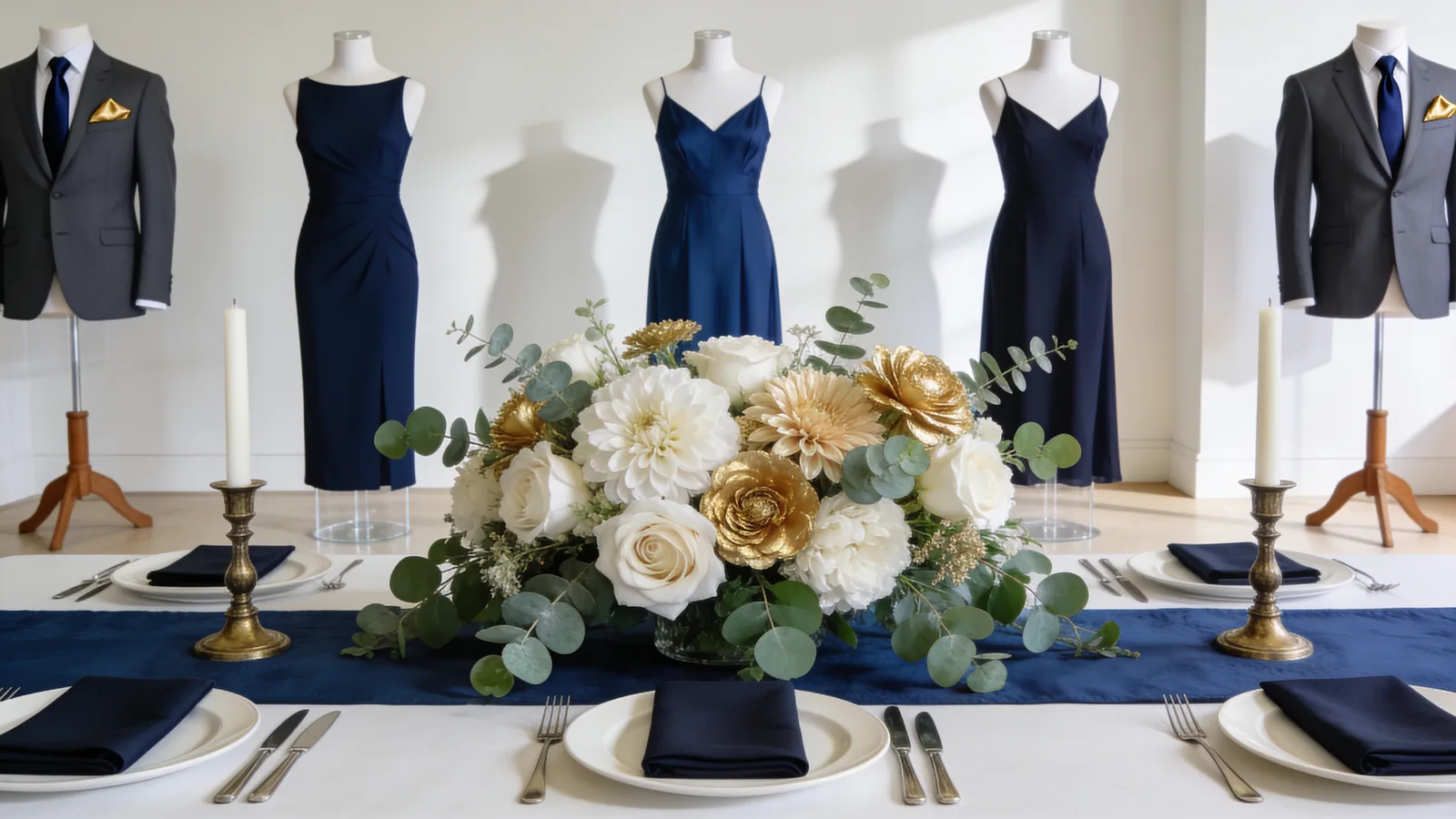
- Navy Blue and Gold: Elegant and enduring. Use gold chargers, navy table runners, and white orchids for an upscale look.
- Navy Blue and Sage Green: Fresh and natural. Sage adds an earthy tone. Combine with eucalyptus and navy candles for a lush garden vibe.
- Navy Blue and Burgundy: Deep and moody, ideal for fall. Pair burgundy dahlias with navy suits for a rich, dramatic effect.
- Navy Blue and Coral: Coral adds a lively pop. Use coral peonies and navy stationery, balancing boldness with elegance.
- Navy Blue and Lavender: Soft and serene. Lavender sprigs in bouquets and navy lace details create a dreamy atmosphere.
- Navy Blue and Peach: Peach softens navy's boldness. Peach ranunculus and navy accents offer warmth and charm, especially in summer settings.
For more tailored inspiration, try the VeilBoard quiz for a personalized navy blue wedding palette in just 60 seconds. It's a shortcut to a cohesive look without the guesswork.
Choosing Complementary Colors for Navy Blue
The complementary color for navy blue lies in the orange and coral family. Soften this into shades like coral, peach, terracotta, or gold for a wedding palette. These hues offer a warm contrast to navy blue, enhancing its depth without overshadowing it. Follow the 'three-color rule': use navy as your dominant color, pair it with a soft supporting shade like blush or sage, and add an accent such as coral or metallic gold. This ensures a cohesive palette that highlights navy blue's versatility. Avoid dark, cool tones to prevent a somber look in low-light settings (source). Use fabrics like silk or velvet to complement navy's richness, and consider coral peonies or peach roses to tie it all together.

The Three-Color Rule in Wedding Palettes
The three-color rule involves one dominant color, one supporting color, and one accent color. With navy as your dominant shade, create a balanced palette that feels cohesive and stylish. Pair navy with a soft blush or cream for warmth and contrast. Consider coral or gold as accents to add brightness. This ensures each color enhances the visual harmony of your wedding decor.
Navy as the main color gives your palette a classic foundation. Use it in bridesmaid dresses, table linens, or even the groom's suit. Blush or cream can complement through floral arrangements, featuring roses or peonies, or in the stationery suite. Accent hues like coral or gold bring in that extra pop, perfect for detailing on the cake or reception lighting. Remember, avoid pairing navy with other dark, cool tones, which can make it appear flat or too similar to black in photos.
By following the three-color rule, you strike a balance that feels intentional and sophisticated. It's a framework that allows you to play with textures and materials, like mixing silk with soft tulle or adding metallic accents to your decor. If you're unsure about balancing these elements, the VeilBoard quiz can quickly generate a visual palette tailored to your taste, making the planning process a breeze.
Common Mistakes to Avoid with Navy Blue Decor
Avoid pairing navy blue with other dark, cool shades to prevent low contrast. When navy sits next to charcoal or deep green, it risks reading as black in photos, especially in dim venues. Instead, choose lighter or warmer tones like blush or gold to help navy pop. Ensure navy doesn't look black by using it in well-lit spaces and accentuating with metallics or whites. Stay clear of pure orange; coral or peach offers a softer complement. Coral and peach soften navy's boldness while maintaining elegance.
Symbolism and Emotional Impact of Navy Blue
Navy blue symbolizes depth, stability, and trust, making it a versatile choice for wedding palettes. Its association with the sea and sky evokes a sense of calm and enduring elegance. Often seen in formal settings, navy blue is now embraced as a modern anchor, providing contrast against bolder hues like coral and gold (source). This rich shade works well with a variety of fabrics, from velvet to satin, adding texture and sophistication. In terms of ambiance, navy blue can create a serene or dramatic mood depending on its pairing. Avoid pairing navy with other dark, cool shades to prevent it from appearing black in photos, particularly in dimly lit venues (source). For a harmonious look, consider supporting colors like blush or sage, and accent with metallics or coral to enhance its depth.
Conclusion: Crafting Your Navy Blue Wedding Aesthetic
Crafting your navy blue wedding aesthetic involves selecting complementary colors, understanding the emotional impact of navy, and avoiding common decor pitfalls. Pair navy with shades like blush, gold, or coral for balance and contrast. Navy and blush create a soft, romantic palette, while navy and gold add a touch of classic elegance. For a modern twist, try navy with coral or peach, drawing on the orange spectrum to complement navy's depth (source). Avoid pairing navy with other dark, cool shades to ensure it doesn't disappear into the background in photos (source).
For a cohesive theme, use the 'three-color rule': navy as the dominant color, with a supporting color like cream or sage, and an accent such as terracotta or metallic (source). Choose flowers like white peonies, blush roses, and greenery to tie the look together. Fabrics like silk and velvet in navy and complementary colors will add texture. VeilBoard can help you visualize these choices quickly: take the 60-second quiz for a custom moodboard, color palette, and more. Let navy blue anchor your design, aiming for either enduring or bold.