
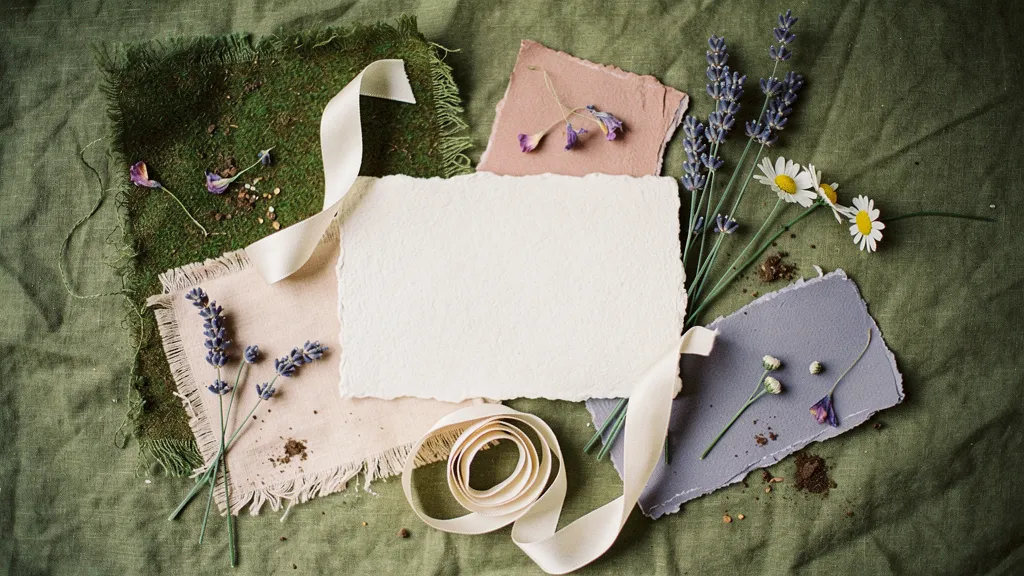
What goes on a rustic wedding mood board
A rustic wedding mood board is the edited version of every barn-wedding pin you have saved: the ten or so images that actually agree with each other. Rustic lives on natural materials and warm, low-saturation color, so the board should feel like it was shot on a wooden table in afternoon light. Build it around five things: a palette, the wood and paper tones, real texture, a couple of wildflowers, and one wide shot of a styled table or barn interior.
The colors
Keep the palette warm and grounded. A reliable rustic set is sage green (), terracotta (), and a soft cream (), with a wood-brown or tan () doing the work a metallic would do in a formal palette. One of those colors should clearly lead; the rest support. If you want to see the exact shades on dresses and a table before you commit, drop them into the color palette generator and copy the hex codes onto your board.
The materials
Materials are what make rustic read as rustic, and they are the part most boards skip. Include kraft paper, raw or slubby linen, unfinished or reclaimed wood, and a warm metal like aged brass or copper rather than bright silver. A single glass element, a jar or a taper holder, keeps it from feeling heavy. If you are torn between digital and physical, this is the look that rewards a physical board: you can pin an actual scrap of linen and a paint chip next to each other and see instantly whether they get along.
The flowers
Rustic florals look gathered, not arranged. Two or three blooms carry it: dahlias or garden roses for weight, then something loose and airy like baby’s breath, wildflowers, or seeded eucalyptus for the just-picked feel. Add a dried element (wheat, bunny tails, or pampas) if your wedding is late summer or fall. Put one bouquet shot on the board so the florist reads the density you mean.
The line between rustic and kitsch
This is the part worth being honest about. Rustic tips into country-store territory when every object is a prop: burlap on burlap, mason jars as far as the eye can see, a chalkboard for every sign. The fix is restraint. Let good materials and real flowers do the talking, and cut anything that is there to announce a theme rather than serve the look. One or two rustic signatures land; a dozen read as a set from a party store.
Put it to work
Once the board holds together, send it to your florist and venue before the first meeting and name your two non-negotiables, usually the palette and one material, like reclaimed wood. That is what keeps the flowers, the paper, and the tables reading as the same wedding instead of three takes on “rustic.”