
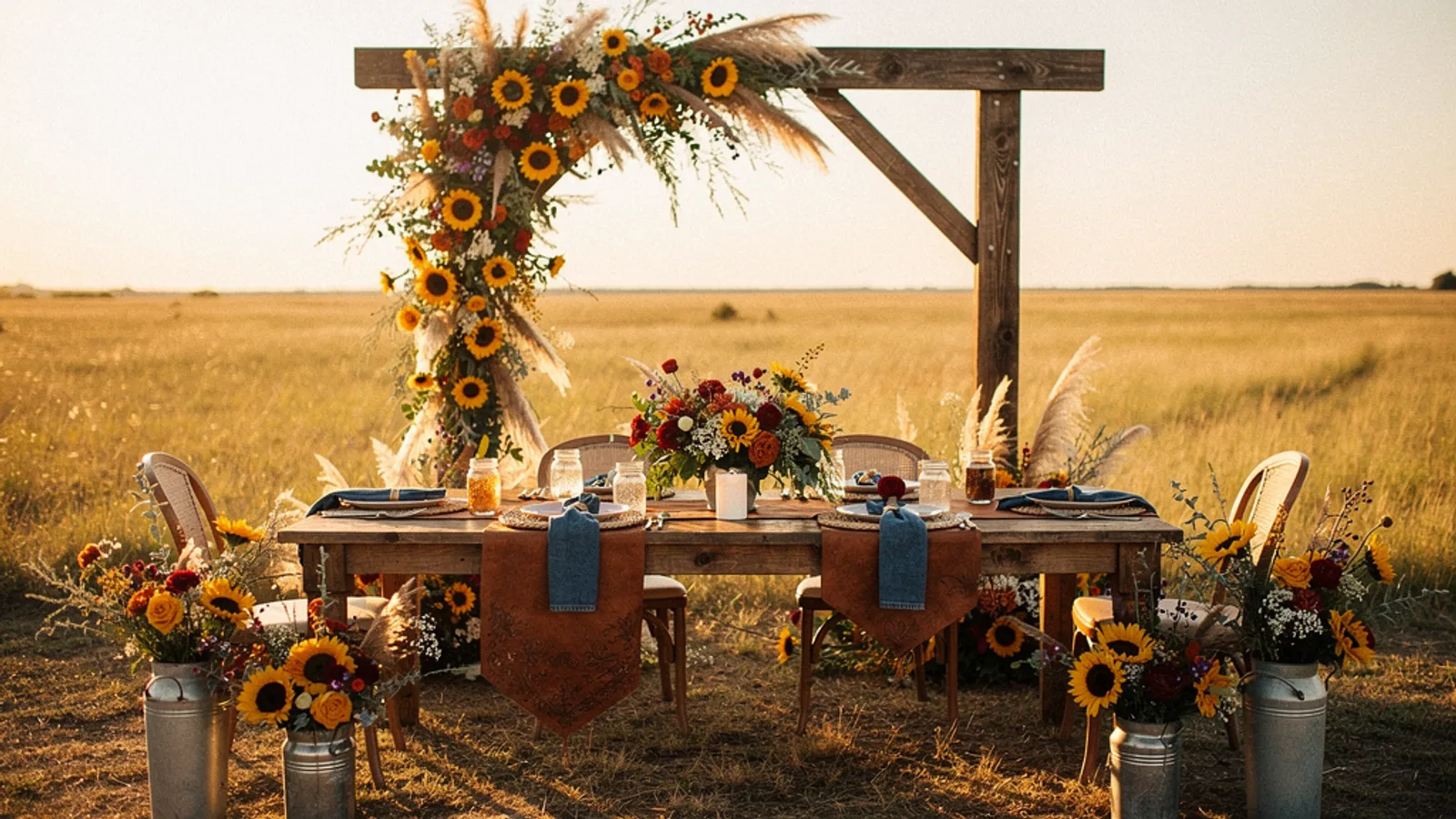
What makes a wedding western
The western wedding has grown up. The current version is not the cowboy-hat-and-wagon-wheel look; it is a refined ranch aesthetic built on leather, wood, warm neutrals, and wildflowers, with the western references dialed way down. It reads relaxed, warm, and a little rugged, and it suits ranch, desert, and barn weddings where the setting already does most of the talking.
The colors
Western palettes are warm and grounded. Build on cream and tan () with a leather brown, then lead with rust (), sage (), or a faded denim blue. It sits close to boho and rustic on the color wheel, so the difference is mostly in the materials rather than the palette. Keep everything sun-warmed and low-saturation.
Decor and materials
Materials carry western more than color does. Leather, raw and reclaimed wood, woven textures, and warm metals are the base. A hat or a pair of boots as a personal detail is welcome; a wall of horseshoes and wagon wheels is not. Wheat, pampas, and dried elements add texture, and cowhide or fringe works in very small doses. Long wooden tables and simple linen keep it grounded.
The florals
Western florals are loose and a little wild. Wildflowers, roses, and ranunculus mixed with wheat, pampas, and plenty of greenery read the part. Sunflowers can work but tip toward kitsch fast, so use them sparingly if at all. Aim for gathered and sun-dried rather than tight and formal.
The line between western and costume
This is the whole game with western. It works when leather, wood, and warm neutrals set a refined, rugged tone; it fails when the theme becomes a rodeo set of horseshoes, cacti props, and novelty signage. Pick one or two genuine western signatures, like leather details and a good hat, and let the materials and setting carry the rest. It suits ranches, deserts, barns, and outdoor summer and fall weddings.