
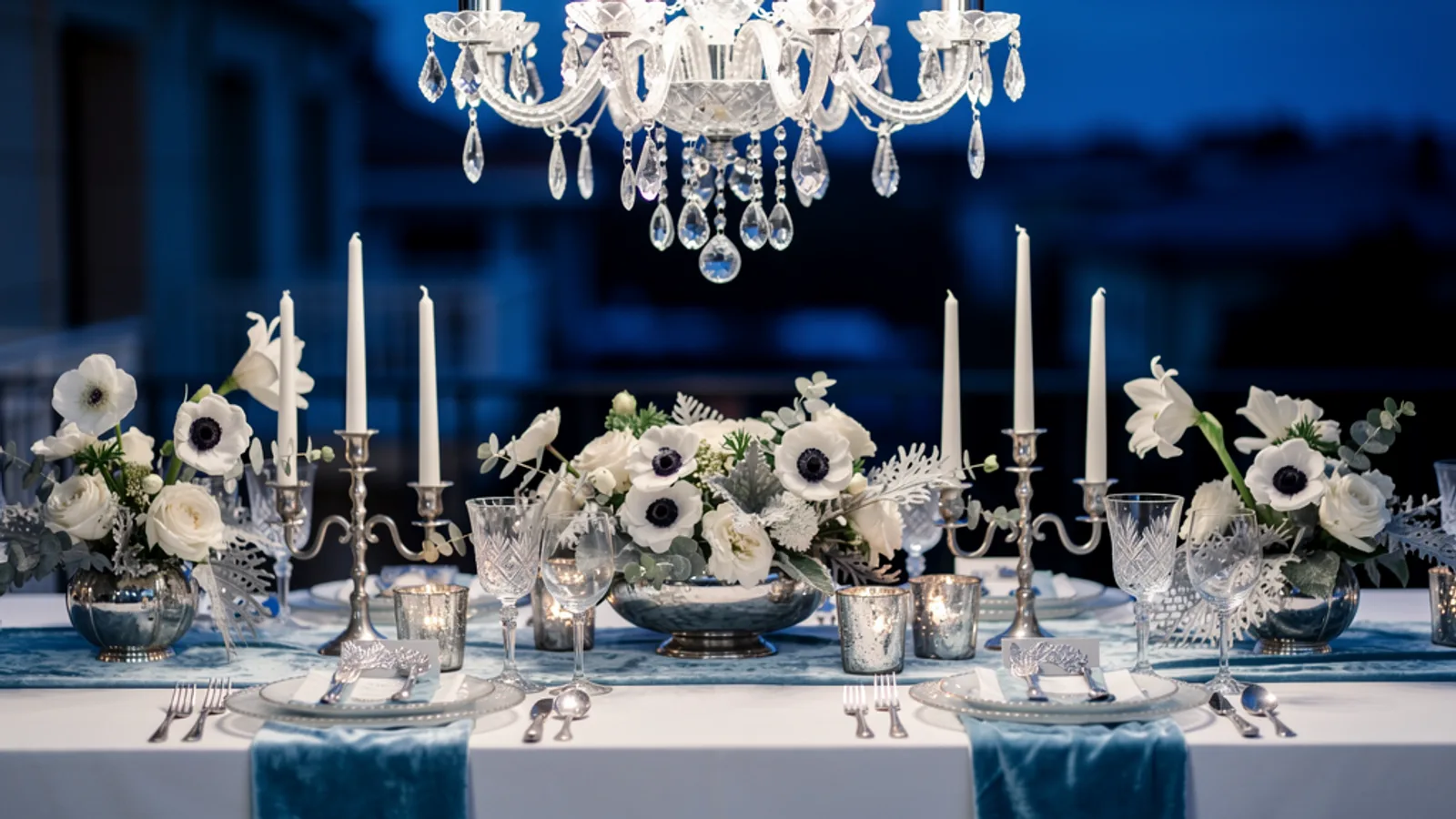
The two winter weddings
Almost every winter wedding is really one of two looks, and the first decision is which. The icy version is cool and crystalline: white, silver, ice blue, frost, and lots of sparkle, the season at its most elegant. The cozy version is warm and candlelit: deep jewel tones, evergreen, velvet, and gold, the season at its most intimate. Both are winter; they just pull in opposite directions, so pick one and commit.
The icy palette
Cool and pale. Build on white and a soft silver, with ice blue () and frost-grey leading and a crystal or mercury-glass sparkle throughout. It reads elegant and a little glamorous, especially by daylight or under bright, cool lighting. Keep warmth out of it; a stray gold or terracotta note breaks the frozen effect.
The cozy palette
Deep and warm. Emerald (), burgundy, and evergreen with a warm gold and cream, lit almost entirely by candlelight. This is the jewel-toned, velvet-and-firelight winter that suits an evening reception. It shares a lot with the moody direction, and the two pair naturally for a fall-into-winter wedding.
The florals
For the icy look, use white roses, anemones, ranunculus, and amaryllis with silvery dusty miller, frosted eucalyptus, and a few berries. For the cozy look, go deeper: burgundy and dark-red roses, evergreen, pinecones, and dried elements. Both lean on winter greenery, which is why greenery-heavy arrangements read seasonal without needing much color.
Decor and setting
Candlelight does more for a winter wedding than any other single choice, especially for the cozy version. Add evergreen garlands, pinecones, and a little velvet or faux fur on the seating for warmth, or crystal, mercury glass, and frosted branches for the icy version. Winter weddings live indoors: ballrooms, lodges, historic venues, and anywhere with a fireplace. The one rule is to keep your chosen direction consistent, since icy and cozy details in the same room cancel each other out.