
What makes a wedding jewel tone
A jewel tone wedding is built on the deep, saturated colors of gemstones: emerald, sapphire, ruby, amethyst, and topaz. It reads opulent and formal, and it comes alive by candlelight, which is why it belongs to evening receptions in cooler months. The look is rich rather than bright, so the colors are deep and a little dark, not primary or neon.
Choose two or three, not all five
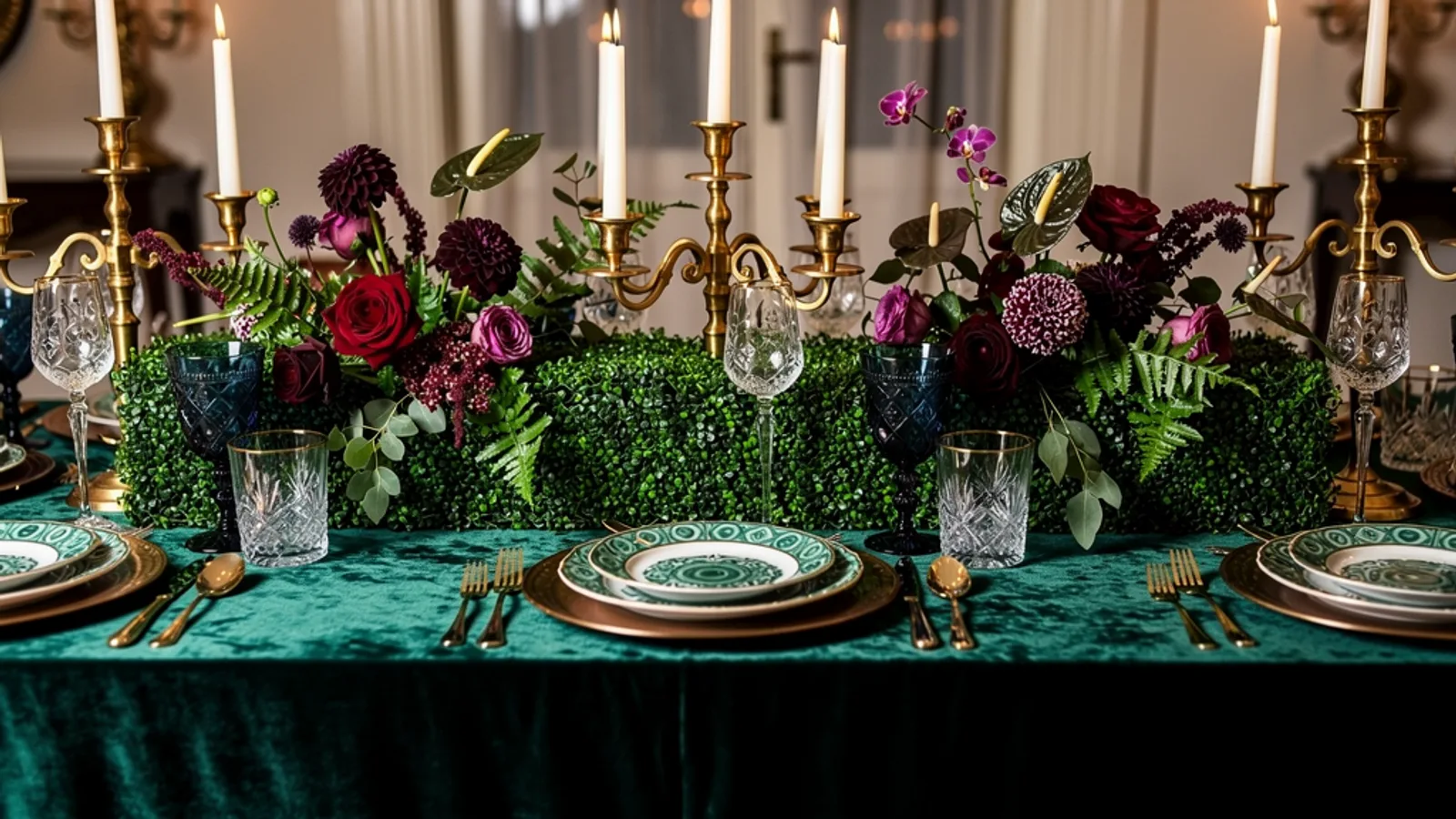
This is the decision that makes or breaks the palette. Five gemstones at once reads like a paint box; two or three reads like a jewel. Pick a lead — emerald () is the most popular right now — then one or two partners like sapphire navy or a ruby burgundy (), add gold as the metallic, and ground everything in a warm ivory or a near-black. The neutral is what keeps the richness from becoming heavy.
Decor and materials
Jewel tones want texture that matches their depth. Velvet is the signature fabric, in the linens, the napkins, or the seating. Add gold or brass, mercury glass, and a lot of candlelight, and let the tables run dark and rich rather than light and airy. The palette does most of the work, so the decor can be restrained as long as the color is deep.
The florals
Florals go as deep as the palette. Burgundy and plum dahlias, dark garden roses, ranunculus, and calla lilies in the gem colors, mixed with rich greenery and the occasional gold accent. Keep them lush and slightly overgrown, and let the arrangements read jewel-toned themselves rather than adding a pale flower that breaks the effect.
Where it works
Jewel tones suit fall and winter, evening receptions, and formal venues: estates, ballrooms, and historic spaces you can light with candles. They pair naturally with the moody and Old Hollywood directions, and a single jewel tone with gold is one of the safest routes to a wedding that looks expensive.