
What makes a wedding celestial
A celestial wedding takes the night sky as its reference: stars, moons, and constellations rendered in deep color and metallic light. It is romantic and a little mystical, and it lives in the evening. Done with restraint it reads rich and dreamy; the risk, which the next sections deal with, is tipping into a novelty look, so the whole approach is subtle motifs over literal ones.
The colors
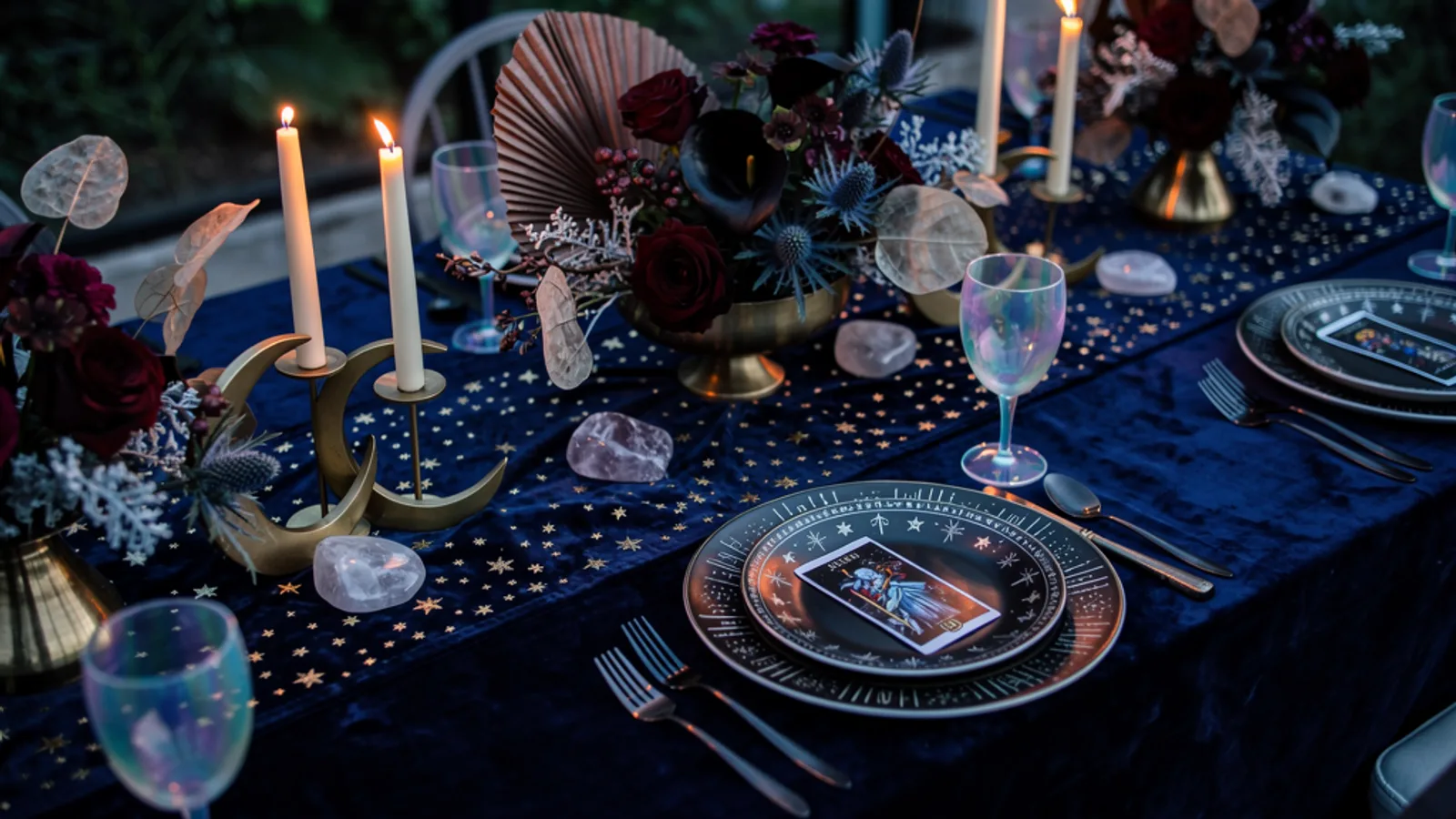
Celestial palettes are dark and metallic. Build on midnight or navy blue () and a deep plum or near-black, then let gold or silver stand in for starlight. A touch of ivory keeps it from going fully black. The depth of the base color is what sells it, so resist lightening the palette; the drama is in how dark and rich the blue goes.
Decor and details
Suggest the sky rather than illustrate it. Scattered gold stars on deep-blue linen, a constellation motif on the stationery, hanging lights or candles read as stars, and plenty of candlelight all work. Metallic chargers, mercury glass, and a moon-phase detail in the signage or seating chart add the theme without shouting it. Keep the star count low and the finishes real; glow-in-the-dark stars are the thing to avoid.
The florals
Celestial florals lean dark and silvery. Deep blooms — plum dahlias, burgundy roses, dark calla lilies — mixed with silvery dusty miller, thistle, and white anemones with their dark centers, which echo the night sky beautifully. Add small metallic accents rather than more color, and keep the arrangements moody to match the palette.
Where it works
Celestial belongs to evening receptions, especially in fall and winter when it gets dark early and the deep palette and candlelight read strongest. Indoor venues you can dim, planetariums, rooftops, and any space with a real night sky overhead all suit it. Lean on the lighting, since a celestial look needs the dark to work.