
What makes a wedding Old Hollywood
Old Hollywood is glamour with the lights turned low. It draws on the golden age of film, roughly the 1930s through the 50s: draped satin, sculpted silhouettes, a sultry monochrome palette, and the feeling of a premiere. It is sophisticated and grown-up, built for an evening, and it suits couples who want their wedding to feel cinematic and a little sultry rather than sweet.
The colors
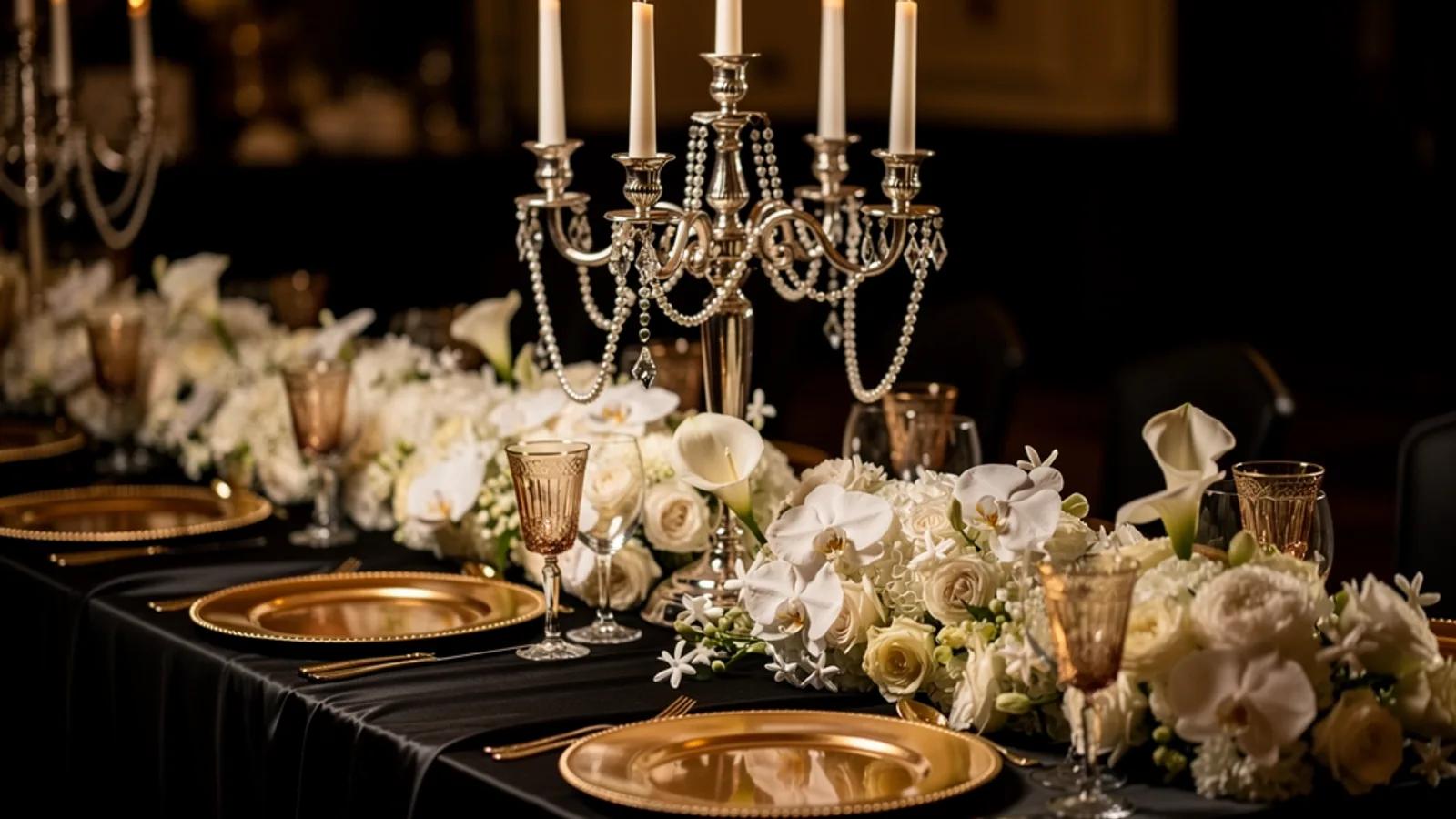
The palette is high-contrast and restrained. Black and white with ivory () is the classic base, lifted by one bold accent: a deep lipstick red, an emerald, or all-over gold and champagne for a softer take. Silver and crystal suit the cooler version. Whatever you choose, keep it to a monochrome plus one color, since the drama comes from contrast rather than variety.
Decor and materials
Think texture and shine over pattern. Draped satin and velvet, crystal chandeliers, mirrored and glass surfaces, tall candelabras, and a lot of candlelight set the tone. A dramatic entrance moment (a grand staircase, a curtain, a long draped table) earns its place here. Feathers and a red-carpet runner read Hollywood in small, deliberate doses.
The florals
Old Hollywood florals are lush, tall, and monochromatic. White or deep-red roses, calla lilies, and orchids in tall, dramatic arrangements suit it, often raised on stands so the room reads grand. Keep the color tight to the palette and let scale and symmetry do the work.
Old Hollywood vs. Art Deco
These two get mixed up, so it is worth drawing the line. Art Deco is the 1920s: geometric, angular, and pattern-driven, all chevrons and sunbursts. Old Hollywood is a decade or two later and softer: draped fabric, curves, and cinematic glamour rather than hard geometry. Both are black-tie, but Deco is graphic where Hollywood is sultry. It shines in ballrooms and historic hotels at formal evening weddings.